Ostracism: why being left out really hurts (and what it can end up costing)
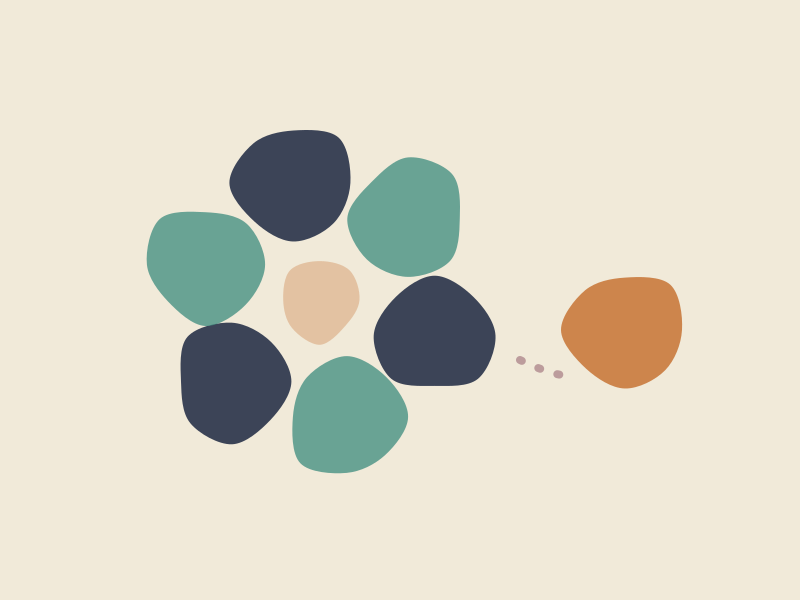
A man is in a park. Two strangers playing with a frisbee throw it to him and, for a while, the three of them play together. Then, for no apparent reason, they stop throwing it his way. The man stays where he is, surprised at how bad he feels about something so small.
That man was the psychologist Kipling D. Williams, and that trivial moment became one of the most revealing lines of research in social psychology: the study of ostracism. The underlying question is uncomfortable and deeply human. Why does it hurt so much to be left out, even when the people doing it mean nothing to us?
What is ostracism
In social psychology, ostracism is, quite simply, being ignored and excluded by others. It has two faces:
- the explicit one, such as not being invited, being left out of a group or hearing “there’s no room for you here”;
- and the silent one, such as no longer speaking to someone, not answering their messages or acting as if they were not in the room.
The second usually hurts more, because it does not even leave you something to protest against.
Ostracism meaning and origin: pottery shards in Athens
The word comes from ancient Athens. Around 508 BC, after the reforms of Cleisthenes, the city adopted an unusual procedure for getting rid of a citizen it considered dangerous: ostrakismos.
This is how it worked:
- Each voter scratched the chosen person’s name on a fragment of pottery, an ostrakon.
- A minimum of 6,000 votes was needed for the vote to be valid (ancient sources disagree on whether that meant 6,000 votes in total or against the same person).
- The banished person had to leave the city for ten years, but kept their property and could return afterwards with no stain on their name.
It was first used in 487 BC and for the last time around 417 BC, against a politician named Hyperbolus. After that, the Athenians stopped resorting to it. Two and a half thousand years later, we still use its name for something that needs no votes and no pottery: all it takes is to stop looking at someone.
A frisbee in a park and a ball that stops coming
Williams turned what happened to him in the park into an experiment. First he did it in person: two assistants tossed a ball around in a waiting room, included the participant for a few minutes and then left them out. Later, with Christopher Cheung and Wilma Choi, he created a computer version that would become famous: Cyberball.
The participant believes they are playing catch with two other players connected over the internet. At first the ball comes to them. Then the other two only pass it to each other. The players are fictional, the game is trivial and the ball does not exist. Even so, people come out of the game hurt, sad and, often, angry.
Why social exclusion hurts, literally
In 2003, Naomi Eisenberger, Matthew Lieberman and Williams himself put Cyberball inside an MRI scanner. They published the result in Science with a question for a title: “Does rejection hurt?”
While participants were being excluded, activity rose in the dorsal anterior cingulate cortex, a region that is also involved in the distress of physical pain. The stronger that activation, the more distress they said they felt. Another region, the right ventral prefrontal cortex, also became active, and its activity ran in the opposite direction to the distress, as if it were trying to regulate it.
Later studies have refined that map. A meta-analysis by Jean-Yves Rotge and his team (2015), covering 46 studies and 940 participants, most of them using Cyberball, found activation in both the dorsal and the ventral parts of the anterior cingulate cortex, and the distress participants reported was linked mainly to the ventral areas. The connection between exclusion and pain holds; what is debated is which subregion does which part of the work.
Roger Fisher and Daniel Shapiro, of the Harvard Negotiation Project, cite this study in Beyond Reason (2005) alongside a classic review by Roy Baumeister and Mark Leary (1995) on the need to belong. That review concluded, among other things, that people form bonds even without any material advantage, and that the breaking of those bonds is associated with intense negative emotions.
Put less technically: we are built to notice right away when we are being left out. It is an ancient alarm, and it goes off even when the ball is virtual.
The silent treatment: when ostracism happens at home
There is a precise name for the domestic version of ostracism: the silent treatment. Deliberately not speaking to someone, without telling them why, so that they feel the punishment.
Williams devoted an entire book to that silence, Ostracism: The Power of Silence (2001), in which he studies it in couples and families. The title says it all: silence used this way is not an absence of communication. It is a message, and one of the harshest.
That is why the silent treatment sits so close to passive-aggressive communication, where discomfort is expressed without being said, and to ghosting, its digital version, in which someone disappears from a conversation as if they had never existed.
Ostracism at work: the meeting that cost several million
Fisher and Shapiro include in their book a case that a senior official told them during an advisory session with Shapiro. A colleague of hers expected to be invited to an important interdepartmental meeting. He was not invited. He felt pushed aside by the organization and by those who had called the meeting.
According to the account, he later found a legitimate way to hold back several million dollars earmarked for the organizing department. The funds were not released until six months later.
Being left out of a meeting may seem a trifle, but not to the person who is left out.
The authors suggest something so simple it is a little embarrassing not to have thought of it before: before calling a meeting, ask whether anyone might be sensitive to being left out. And if the decision is not to invite them, at least explain it to them, so they do not hear about it from someone else. A minute of reflection, they write, can save hours of grief.
Social exclusion: when it is not a gesture but a situation
It helps to tell apart two uses of the same phrase. In everyday life, social exclusion means being left out of a group, a conversation, a plan. In social policy, by contrast, it refers to a broader and more persistent situation: that of people or groups who cannot fully take part in economic and social life, because of poverty, lack of access to services or other barriers. It is what is being measured when people talk about being “at risk of social exclusion”.
Both uses share a root. In both, what hurts is not only losing something concrete, but receiving the message that you do not count.
Why it matters in any negotiation
The story of the withheld funds teaches something negotiators know well: people who feel excluded do not always protest. Sometimes they simply stop cooperating. And when they do, it is usually in a way that looks legitimate, which makes the origin of the problem even harder to see.
Exclusion opens wounds that tend to be paid back, and the conflict can slip into the blow-for-blow logic of the eye for an eye principle. At the other extreme, feeling listened to is one of the cheapest antidotes there is, as we explained when writing about active listening.
If you are curious about how you move within groups, you can try our social skills test.
Sources
- Williams, K. D., Cheung, C. K. T. and Choi, W. (2000). Cyberostracism: Effects of being ignored over the Internet. Journal of Personality and Social Psychology, 79(5), 748-762.
- Eisenberger, N. I., Lieberman, M. D. and Williams, K. D. (2003). Does rejection hurt? An fMRI study of social exclusion. Science, 302(5643), 290-292.
- Rotge, J.-Y., Lemogne, C., Hinfray, S., Huguet, P., Grynszpan, O., Tartour, E., George, N. and Fossati, P. (2015). A meta-analysis of the anterior cingulate contribution to social pain. Social Cognitive and Affective Neuroscience, 10(1), 19-27. https://doi.org/10.1093/scan/nsu110
- Williams, K. D. (2001). Ostracism: The Power of Silence. Guilford Press.
- Williams, K. D. (2007). Ostracism. Annual Review of Psychology, 58, 425-452.
- Baumeister, R. F. and Leary, M. R. (1995). The need to belong: Desire for interpersonal attachments as a fundamental human motivation. Psychological Bulletin, 117(3), 497-529.
- Fisher, R. and Shapiro, D. (2005). Beyond Reason: Using Emotions as You Negotiate. Viking Penguin. Chapter 4, “Build Affiliation”, and “Works Consulted” notes.
- Aristotle (attributed). Constitution of the Athenians, 22.
Want to know more about yourself?
Discover your result with one of our related tests.
Frequently asked questions
What is ostracism?
In social psychology, ostracism is being ignored and excluded by other people. It can be explicit, such as leaving someone out of a group, or silent, such as no longer speaking to them or acting as if they were not there. Psychologist Kipling D. Williams is one of the researchers who has studied it most.
Where does the word ostracism come from?
From the ostrakismos of ancient Athens, a procedure by which citizens could banish someone for ten years. They voted by writing the person's name on pottery fragments called ostraka. It was introduced around the end of the sixth century BC and fell out of use around 417 BC.
What is social exclusion?
In everyday life, the phrase is used to describe being left out of a group or a relationship. In social policy it refers to something broader: the situation of people or groups who cannot fully take part in economic and social life because of poverty, lack of access to services or other barriers.
Why does being ignored hurt so much?
A study by Eisenberger, Lieberman and Williams published in Science in 2003 found that being excluded in a virtual game increased activity in the dorsal anterior cingulate cortex, a region that is also active during physical pain, and that this activity was related to the distress participants reported.
What is the silent treatment?
It is deliberately refusing to speak to someone without explaining why. Kipling D. Williams studies it as a form of ostracism in his book Ostracism: The Power of Silence (2001).