Does Rushing to Fill the Void Sabotage Grief After a Breakup? (The Empty Valley of the Tao Te Ching)
Does Rushing to Fill the Void Sabotage Grief?
The first impulse after a breakup is almost never to sit still with the emptiness: it’s to cover it up. With a dating app, with nonstop plans, with the first person available who shows interest.
Popular wisdom says that rush comes at a price. The Tao Te Ching devotes an entire chapter to explaining why emptiness is what makes things useful. And research on breakups, where it has been measured, gives a less clear-cut answer than people usually assume.
This article crosses the Tao Te Ching with research in social psychology on rebound relationships and self-concept. It’s meant for general information and doesn’t replace support from a mental health professional.
The vessel, the wheel and the house: praise for emptiness
Chapter XI of the Tao Te Ching is probably the most quoted image in the whole text for talking about emptiness:
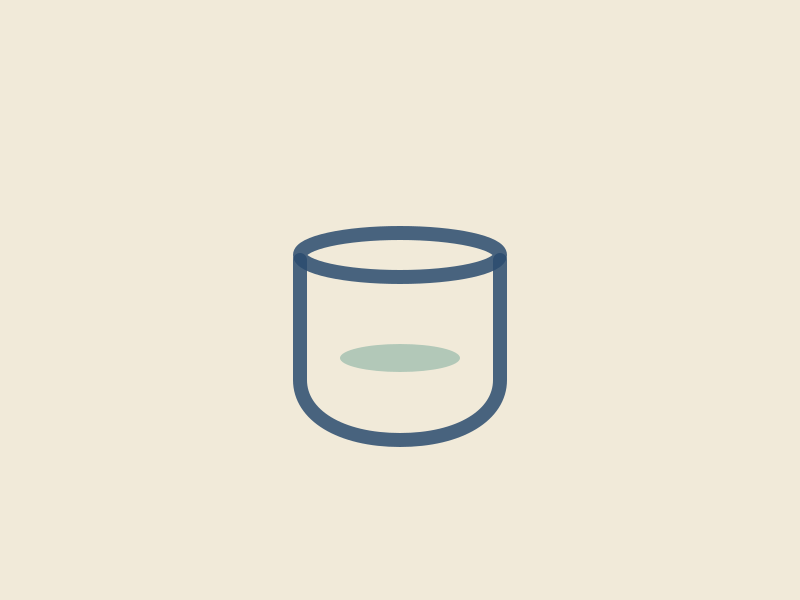
“Thirty spokes converge at the hub of a wheel, but it’s the emptiness that makes the cart useful. Clay is shaped into a vessel, but the vessel’s use depends on its emptiness. Doors and windows are cut into the walls of a house, and it’s the emptiness that makes it livable. We focus on what is, but usefulness depends on what isn’t.”
No vessel is useful because of its clay, but because of the space that clay leaves free; no house is lived in because of its walls, but because of the gap between them.
The Tao Te Ching isn’t describing a philosophical ornament: it’s pointing out that emptiness isn’t a flaw to be corrected as soon as possible, but the condition that makes what comes next possible.
The urge to cover the gap right away
After a breakup, that emptiness almost always feels urgent to resolve.
Researcher Erica Slotter, together with Wendi Gardner and Eli Finkel, studied this phenomenon by focusing on a very precise aspect: self-concept clarity.
In a paper published in Personality and Social Psychology Bulletin (2010), they found, across three studies, that a breakup changes the content of the self-concept and reduces its clarity. The explanation they propose is that during a relationship identities become intertwined (friends, activities, a “we” instead of “me and my partner”). That confusion about who you are without the relationship predicted, on its own, part of the later distress.
That’s an important clue: the emptiness a breakup leaves behind isn’t just the absence of the other person. It’s often the absence of a part of your own self-concept that had been built alongside them.
Filling that gap at full speed can be a way of sidestepping that uncomfortable question: who am I now, without that “we”? It can be, but it doesn’t have to be, as the next study shows.
What the research on rebound relationships actually says
Here research contradicts popular wisdom, and the question in the title too. Psychologists Claudia Brumbaugh and R. Chris Fraley studied, across two studies, people who had just broken up and measured their wellbeing, what they still felt for their ex, and whether they had started another relationship. Their work, published in the Journal of Social and Personal Relationships (2015), found the opposite of what was expected:
- People who had a new partner showed more confidence in their own desirability and more emotional closure regarding their ex than those who were still single.
- Among those who already had a new partner, having started that relationship sooner was associated with better psychological wellbeing and a healthier relationship, not a worse one.
Two important limits: these are correlational data (perhaps the people who recover sooner are also the ones who feel ready to date sooner), and they don’t measure grief itself. But they’re enough to rule out the idea that speed, on its own, sabotages it.
Curiously, it fits the Tao Te Ching’s image: what matters isn’t so much the speed of the calendar as what function the thing filling the void serves. A vessel full of water is still useful. The problem shows up when the gap is filled just so you don’t have to look at it.
Mature love, immature love: Erich Fromm’s distinction
Psychoanalyst Erich Fromm, in The Art of Loving (1956), makes a distinction that speaks directly to this idea.
For Fromm, immature love says: “I love you because I need you,” while mature love says: “I need you because I love you.”
The difference isn’t semantic: in the first formula, the other person exists to fill a void of your own; in the second, the void is already held some other way, and the bond is added to a life that already had meaning without it.
Filling the gap left by a breakup with a new relationship isn’t, in itself, a mistake. Within Fromm’s framework, the risk shows up when that relationship is sought from his first formula: as an urgent patch for a lack, rather than as an encounter with someone you’re genuinely interested in getting to know.
You can read more about this specific idea in our article on childish or mature love: Erich Fromm’s phrase.
What all this suggests, in practice
The answer to the question in the title, with the data available, is: not necessarily. Neither the Tao Te Ching nor the research cited suggests a minimum waiting period before meeting someone new. What they do point to is this:
- The emptiness that follows a breakup isn’t just the other person’s absence: it usually includes a part of your self-concept that’s worth rebuilding, not just covering up.
- Speed isn’t the main problem: according to Brumbaugh and Fraley, starting a new relationship soon was associated with better adjustment, not worse.
- The useful question is “what function is this serving”: it tells genuine curiosity about someone apart from fleeing discomfort.
- Giving the emptiness time to be felt isn’t the same as staying stuck in suffering: according to the Tao itself, it’s the condition that makes whatever comes next useful.
If you notice that your day-to-day wellbeing depends too much on always having someone occupying that place, the emotional dependency test can help you see it more clearly, and the attachment style test can help you understand what specific pattern tends to push you to fill the void before its time.
This rush to cover the gap sometimes comes paired with a different trap: resisting your own pain instead of letting it pass. We cover it in the first article of this series, why resisting breakup pain makes it last longer, and in the rebound effect of trying not to think about your ex we explore what happens when, instead of filling the void, you try to erase it through sheer willpower.
Sources
- Lao Tzu (anonymous trans.). Tao Te King. Biblioteca Digital, Instituto Latinoamericano de la Comunicación Educativa (ILCE). Chapter XI.
- Slotter, E. B., Gardner, W. L., & Finkel, E. J. (2010). Who am I without you? The influence of romantic breakup on the self-concept. Personality and Social Psychology Bulletin, 36(2), 147-160.
- Brumbaugh, C. C., & Fraley, R. C. (2015). Too fast, too soon? An empirical investigation into rebound relationships. Journal of Social and Personal Relationships, 32(1), 99-118. doi:10.1177/0265407514525086
- Fromm, E. (1956). The Art of Loving. Harper & Row.
Want to know more about yourself?
Discover your result with one of our related tests.
Frequently asked questions
Is it bad to start a rebound relationship after a breakup?
Research doesn't support that as a rule. Brumbaugh and Fraley (2015) found that people who had a new partner after a breakup showed more confidence in their own desirability and more emotional closure regarding their ex. These are correlational data: they don't prove that the rebound causes that wellbeing, nor that it resolves the grief over the previous relationship on its own.
Why does the feeling of emptiness after a breakup feel so intense?
Part of the research on self-concept suggests that when a relationship has been very central to a person's identity, the breakup doesn't just take away companionship: it also creates confusion about who you are without the other person.
What does the Tao Te Ching say about emptiness?
That the usefulness of a vessel, a wheel or a house depends precisely on its empty space, not its solid part. It's a metaphor the Tao Te Ching also applies to people and to inner states.
Does this article replace grief or couples therapy?
No. This is an informational piece that crosses the Tao Te Ching with research in social psychology. It doesn't replace the assessment or care of a mental health professional.